The historic waterway continues to evolve as a key cultural and practical artery, with new attractions, riverfront tech-enabled developments, and evening cruises transforming the visitor experience in Bangkok.
Bangkok’s Chao Phraya River remains one of the city’s most revealing ways to experience the capital, tying together ancient temples, working piers, contemporary shopping districts and the day-to-day movement of residents. Often described as the city’s lifeline, the river is both a practical transport corridor and a cultural landscape, with boat services giving visitors a moving vantage point on Bangkok’s history and modern pace. According to travel guides and local river operators, the waterway also opens up easy access to major sights, from palace grounds to temple complexes and riverside promenades.
One of the most rewarding stops is Wat Arun, the Temple of Dawn, whose central spire is studded with porcelain and shell pieces that glow in the changing light. The temple’s origins stretch back to the Ayutthaya era, and it was later restored under royal patronage, giving it a strong place in Bangkok’s early story. Boats and cross-river ferries make the site straightforward to reach, which is part of its appeal for visitors planning a morning on the river before the heat of the day builds.
Across the river stands the Grand Palace, a former royal residence completed in the late eighteenth century and still one of Thailand’s most important ceremonial sites. Inside the complex is the Emerald Buddha Hall, home to one of the country’s most revered religious images. The palace’s gilded roofs, mirrored surfaces and mural-covered walls make it one of Bangkok’s most distinctive landmarks, while its continued use for official events underlines how closely the city’s political and spiritual heritage remain intertwined.
Further downstream, the riverfront has been reshaped from an old trading zone into a destination for shopping, dining and evening entertainment. Former warehouses now sit alongside modern retail and leisure developments, including ICONSIAM, while waterfront restaurants and live performances draw crowds after sunset. Bangkok travel sources note that visitors can sample local dishes such as grilled prawns and mango sticky rice while watching ferries and longtail boats move through the traffic of the river.
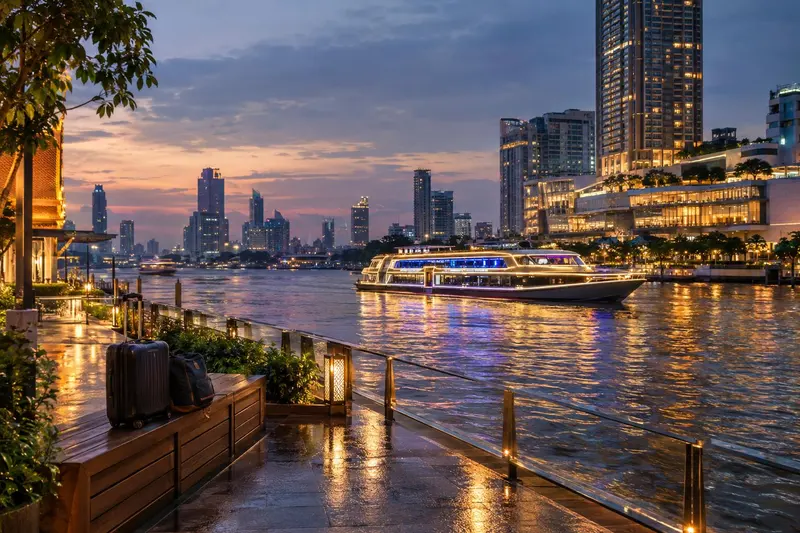
For a broader view of the city, an evening cruise offers a slower and more theatrical way to take in the Chao Phraya. Several routes pass illuminated bridges, temples and heritage buildings, often with dinner, music and commentary included. Depending on the operator, boats may glide past Wat Arun, the Grand Palace and historic bridges, creating a compact introduction to the riverside’s religious, royal and commercial landmarks. For travellers who want convenience as well as atmosphere, riverfront hotels also make sense, with some properties offering shuttle boats to transport hubs and shopping centres, reinforcing the river’s role as both a scenic attraction and a working transport network.